PHOTO
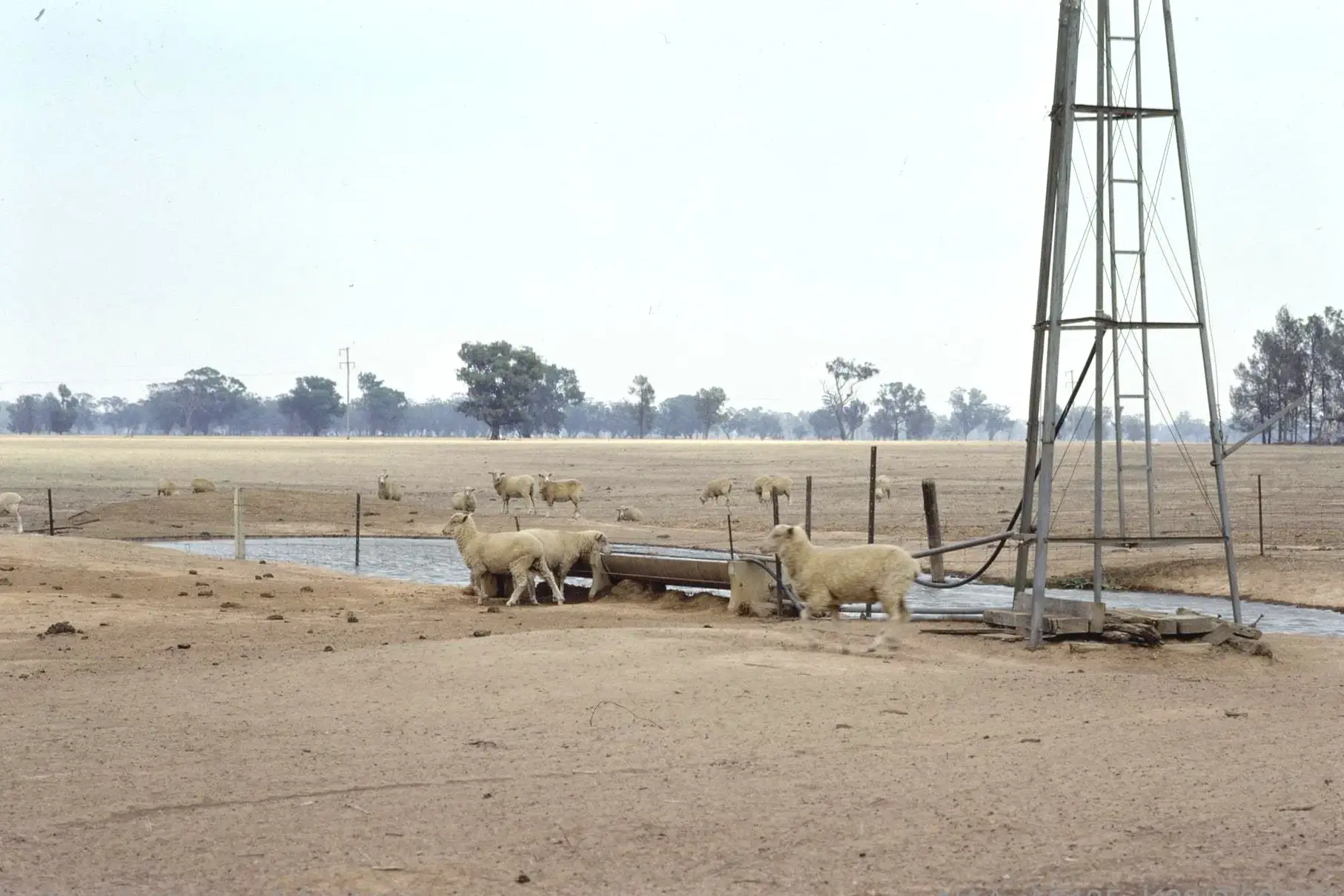
The 1982-83 drought was probably Australia’s worst in the 20th century, in terms of short-term rainfall deficiencies (up to one year) and their impacts.
It started in autumn 1982, with severe rainfall deficiencies over eastern Australia (including Riverina) exacerbated by frequent sharp frosts in June and July.
Dry conditions persisted, and by year’s end extensive areas of eastern Australia had experienced record or near-record low April to December rainfall. The upper Murrumbidgee River became a chain of waterholes.
Reservoirs and dams throughout the Riverina fell to levels unknown for many years.
In February 1983, dust-storms and devastating fires with smoke-haze swept up through the lower southeastern States.
A huge dust storm carried away 50 million tonnes of the topsoil from the Mallee and Wimmera, and then the Ash Wednesday bushfires ravaged the tinder-dry forests of southeastern Australia.
The month was the driest on record over many inland areas of New South Wales. Heavy rain in late March broke the drought.